
Timeline
Download Full Study
1926
Adoption of the Lebanese Constitution with the article 7 recognizing the equality of all citizens before the law is declared as well as article 9 guarantying the respect of the personal status and religious interests of the population.1936
Decision 60 L.R. adopted. Civil marriages performed abroad were officially recognized in Lebanon.[1]1957
Lebanese National Bloc leader, Raymond Edde, submitted a proposal to Parliament in order to establish civil marriage in Lebanon.1971
First optional civil personal status draft law was proposed by the Democratic party.1981
Second optional civil personal status law was proposed by the Secular Democratic party.1990
End of the civil war, adoption of the Taef agreement and amendment of the Constitution.+ Read More
Jan 2024
The Lebanese parliament’s human rights committee discusses a draft law that aimed at unifying the minimum marriage age to 18.+ Read More
Year
Information goes here.
Contextual Update
Read More
Read More
Read More
The Issue
Personal status issues are governed by article 9 of the Constitution, as well as by the decision 60 L.R., issued during the period of the French mandate and still in force to this day. These laws give religious institutions legal and administrative status and jurisdiction over personal status matters, including marriage, divorce, child custody, alimony and inheritance.
Read More
These laws not only enshrine male privilege in several areas, but also differentiate among women across sects, stripping them of their ability to make unified claims to authorities. In Lebanon, there are eighteen officially recognized religious sects and fifteen different personal status laws.
Despite this, the state does have the constitutional power to offer a secular alternative and to devise an optional civil personal status law for all citizens. In parallel, the decision 60 L.R. recognizes the creation of a “civil law community” that would assemble individuals who do not belong to a sectarian community and who wish to be governed by a civil law regarding their personal status issues. On another note, article 25 of the decision 60 L.R. allows Lebanese couples to have a civil marriage outside Lebanon.
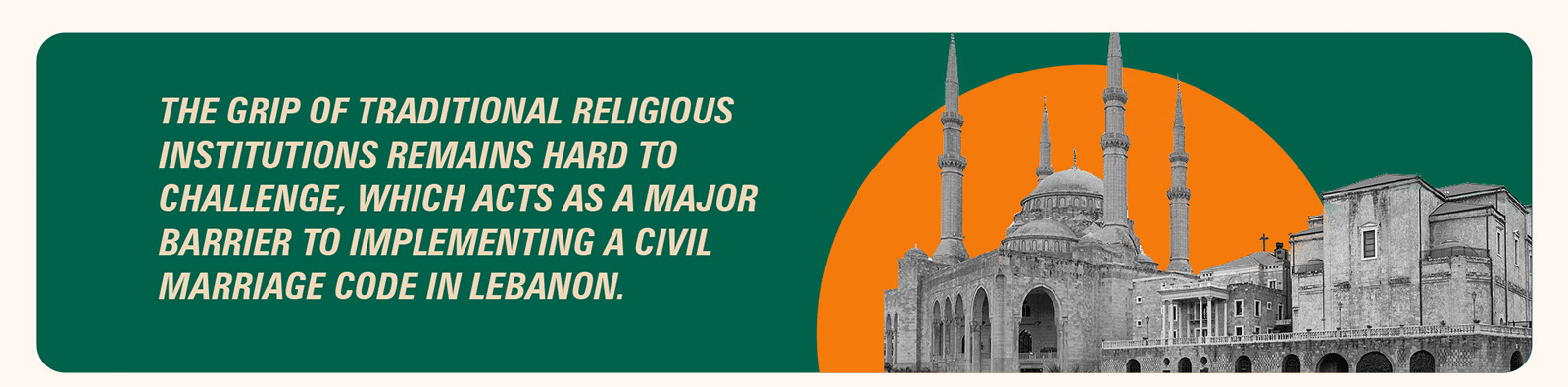
Therefore, while civil marriage can be celebrated abroad and officially recognized by the Lebanese government, the government does not allow civil marriages to be contracted in Lebanon. In fact, since 1951 several draft bills were presented in order to recognize and legalize civil marriages in Lebanon, but they were rejected consistently with resistance spearheaded by the religious authorities.
In 2012, one loophole of the decision 60 L.R. was used in order to legalize civil marriages contracted in Lebanon. This loophole based on the Civil Center for National Initiative (CCNI) was to allow citizens to remove their sectarian affiliations from the civil census records before contracting the marriage on the Lebanese soil.
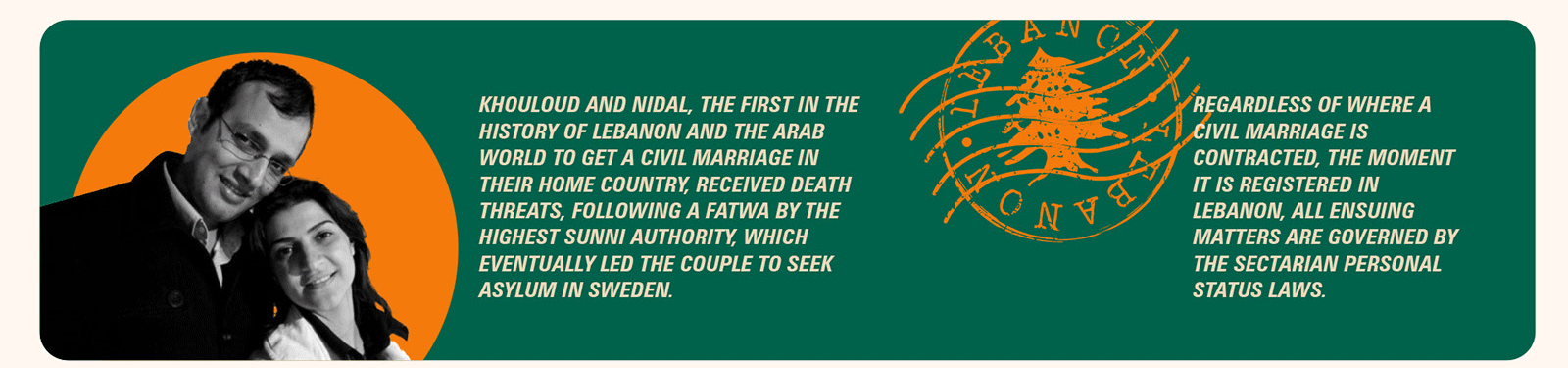
In this year, the first civil marriage Nidal Darwich and Khouloud Sukkarieh on the Lebanese soil was celebrated. It took the authorities five months until the marriage was registered, despite a favorable opinion of the Legislation and Consultation Committee at the Ministry of Justice.
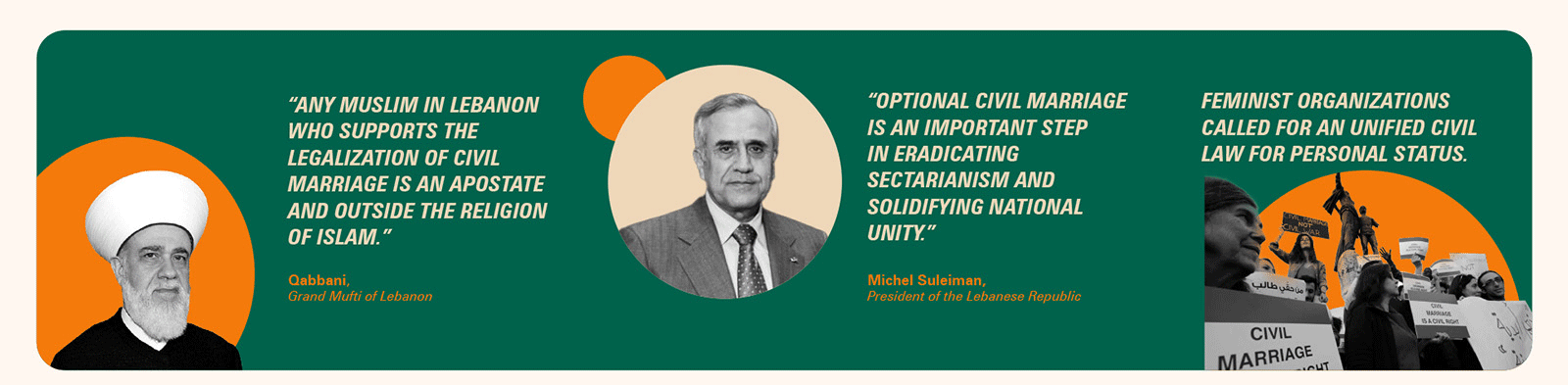
It was not long before the couple started receiving death threats, following a fatwa by the highest Sunni authority in the country calling all supporters of the legalization of civil marriage “apostates and outside the religion of Islam,” which eventually led the couple to seek asylum in Sweden.
Despite this legal precedence, the registration of 50 civil marriages contracted on the Lebanese soil were halted. This was also due to a change at the ministerial level. Some ministers of internal affairs and municipalities refused to register these marriages, one minister, Nouhad Machnouk, advised all couples insisting on getting married civilly “to go to Cyprus”.
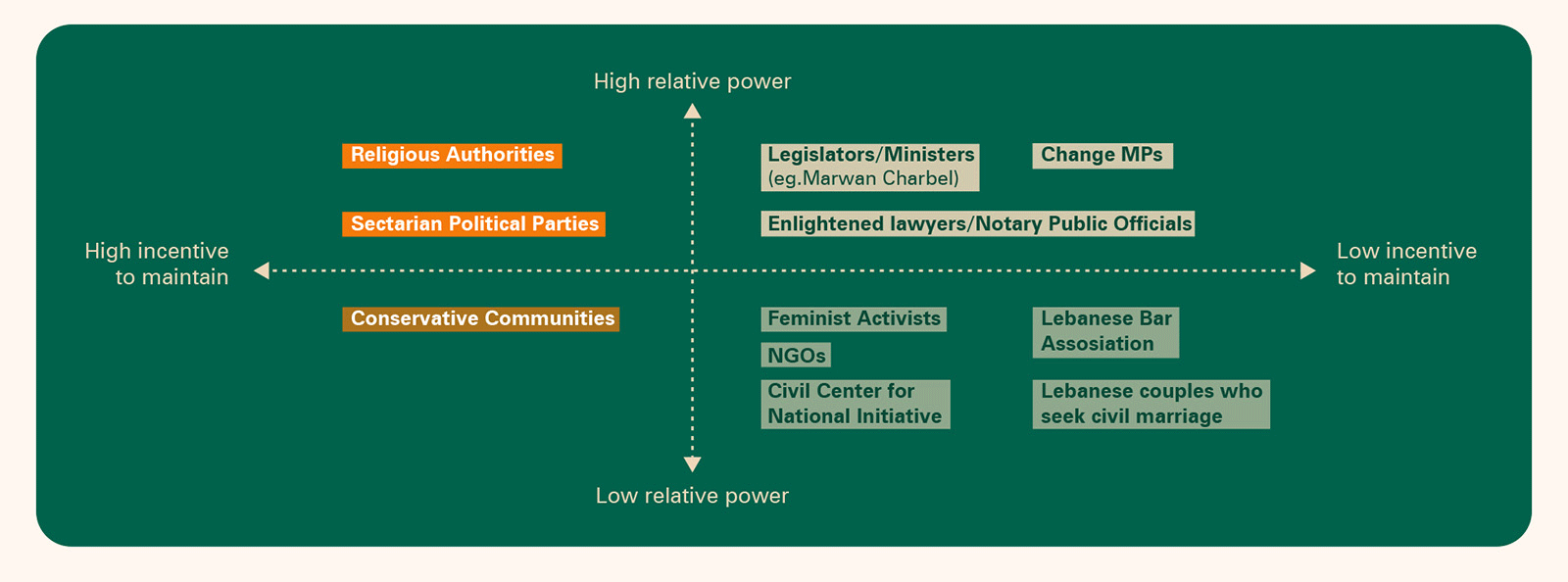
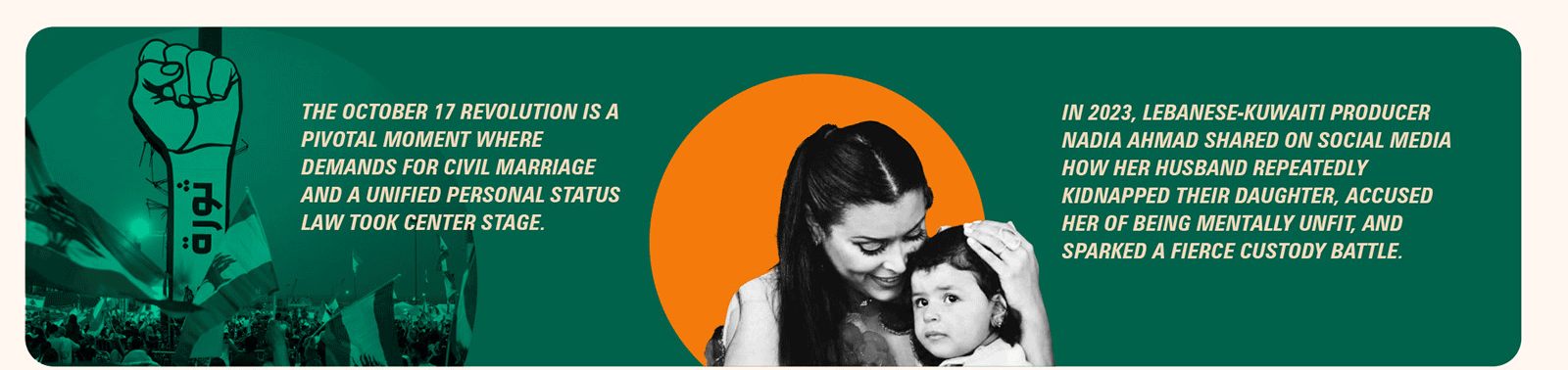
Currently, debates over a civil law proposal reemerges on the eve of junctural political events, particularly parliamentary elections. In December 2022, KAFA organization presented a proposal for a unified personal status law. The draft law was sent to parliament, and signed by 9 parliamentarians (out of 128), 5 of whom are among the newly-elected “Change MPs”. A fierce wave of backlash was launched at them by conservative religious clerics who denounced any attempt at contracting civil marriages in Lebanon.
In parallel to this holistic and systemic approach, another strategy has been to address personal status issues separately as it is done with the child marriage issue. Given the spike in child marriages numbers several NGOs and National women machineries have proposed draft laws and presented them to the parliament for discussion and approval. Till date no law has been adopted in order to put an end to child marriages.
Types of contestation
Read More
Among the six types of backlashes drawn from Flood et al. (2018), the manifestations of backlash on the level of women’s social rights and particularly civil marriage, include the dominant political parties’ deliberate lack of bureaucratic implementation, particularly inaction and active stalling when it comes to legalizing civil marriage. Other types that can be clearly observed in this context are stigmatization and vilification of civil marriage supporters, as well as explicit violent threats, particularly by high religious authorities and their devoted followers and cyber armies.
The issue of civil marriage raises concerns of doctrinal politics and status politics if we are to use the typology of Htun and Weldon (2010). There is an obvious clash between the state, religious groups, and feminist activists on the matter. Further, the issue of civil marriage is linked to the French colonial legacy, in how it provided leeway for secular citizens (and French soldiers who wished to marry Lebanese citizens during the colonial period) to contest abiding by family laws by opting to belong to a “civil law community.”
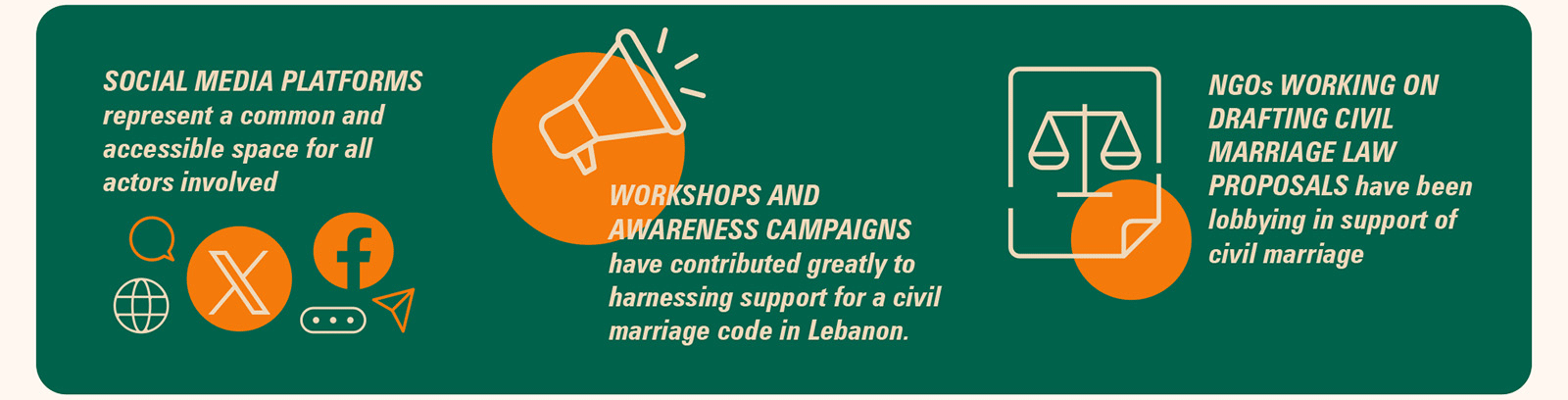
While religious authorities across all sects have rejected the execution of civil marriage on Lebanese soil, activity within civic and popular spaces has been significantly richer and more prolific on the issue of civil marriage.
Actors
Drivers
Read More
Spaces
Read More
Events
Read More
Tactics
Types of tactics:
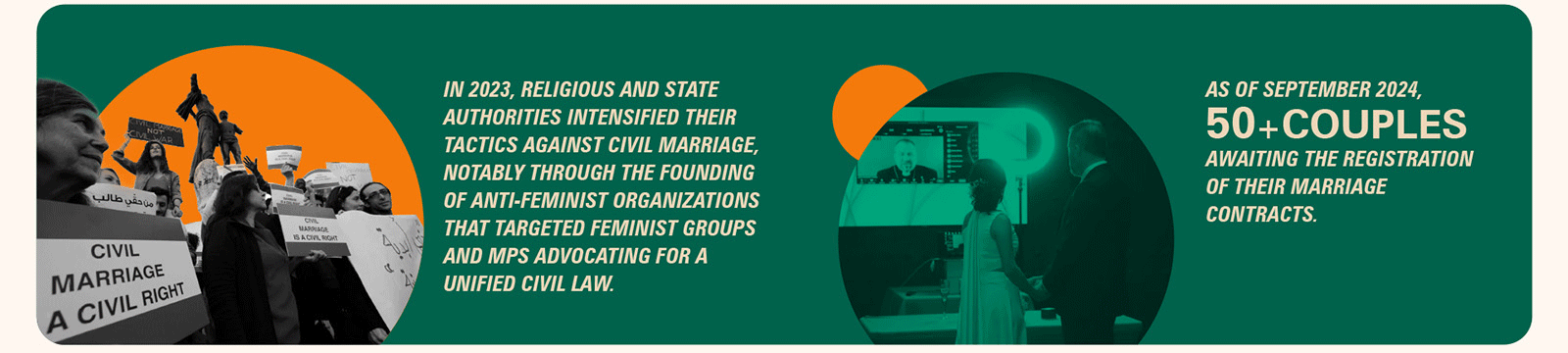
- Non- registration of civil marriage contracts: As of September 2024, more than 50 couples remain unable to register their civil marriages.
- Removal of religious affiliation: Individuals who strike their religious identity from official records risk losing their civic rights, including voting, running for office, and employment in public institutions.
- Unified religious opposition: religious authorities across Muslim, Christian, and Druze communities have consistently opposed civil marriage: “Any Muslim with legal or executive authority in Lebanon who supports the legalisation of civil marriage is an apostate and outside the religion of Islam […]
- Moral stigmatization: conservative political actors equate civil marriage with adultery.
- Social pressure: families and communities may exert pressure on couples who choose to pursue a civil marriage.
- De-registration practices: Civil marriages contracted online during COVID-19 period were reportedly annulled by the General Directorate of Personal Status without the couples’ consent or prior notification. As a result, children registered under records designated for those born to unmarried couples are exposed to social stigma of being labeled “illegitimate,” and are denied several rights.
- Anti-feminist mobilization: the emergence of organizations affiliated with religious institutions targeting feminist organizations that support civil marriage, as well as MPs advocating for a unified civil law.
Read More
Amending personal status laws and establishing a civil law to govern matters related to marriage, divorce, and custody would strip religious figures and politicians of their power. It is important to note that religious marriages constitute a significant source of revenue for religious sects, which derive financial benefit from administering them.
De-registration of civil marriages contracted online:
Khalil Rizkallah and Nada Nehme were the first couple to get civil marriage online in Lebanon (in November 2021) after being assured that their marriage will be formally recognized. Six months later, their marriage was officially registered. Less than a year later however (September 2022), they found out that the authorities abruptly de-registered it and no longer recognized it. This puts their one-month-old daughter in a legally precarious and volatile situation, at risk of being denied registration, as the government requires a marriage certificate to register newborns.
the emergence of anti-feminist organizations affiliated with religious institutions
The organizations support sectarian personal laws and consider civil marriage an idea exported from Western societies, aiming at destroying family values and societies. Hence, an organization known as Hasem (حسم), believes that it has a certain mission which is protecting the family structure from any perceived social threat that justifies its opposition to civil marriage.
Countertactics
Read More
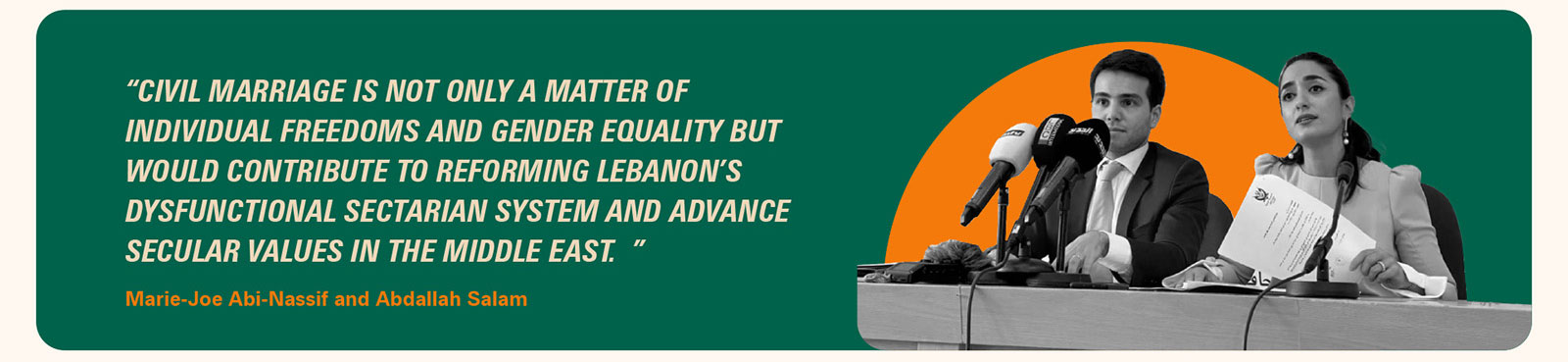
Lawyers Abdallah Salam and Marie-Joe Abi-Nassif, both from politically affiliated families,
decided to tie the knot civilly in Lebanon on June 15, 2019. Their marriage was the first civil marriage to be performed in Lebanon under Minister of Interior and Municipalities, Raya Al-Hassan. Joseph Bechara, the President of Lebanon’s Council of Notaries Public, was the one who officiated their union. Despite their attempt to register the union, it remains stalled at the Ministry of Interior and Municipalities, as with other marriages that followed.
The couple issued a statement declaring that “civil marriage is not only a matter of individual freedoms and gender equality but would contribute to reforming Lebanon’s dysfunctional sectarian system and advance secular values in the Middle East.” It is hoped that such unions will influence the youth to think more in a civil manner and urge them to denounce the monopoly of religious authorities over family law.