Timeline
Download Full Study
1972
Lebanon ratified the International Covenant on Civil and Political Rights. However, Lebanon has not ratified any related optional protocols.1972
Lebanon ratified the International Covenant on Economic, Social, and Cultural Rights. However, Lebanon has not ratified any related optional protocols.1977
Lebanon ratified ILO Convention No. 100 (Equal Remuneration) and No.111 (Non-Discrimination).1991
Lebanon ratified the Convention on the Rights of the Child.1995
Lebanon participated in the Fourth World Conference on Women held in Beijing and endorsed the Beijing Platform for Action.1997
Lebanon ratified CEDAW with reservations to Article 9(2), 16(1), and 29(1).+ Read More
1998
The National Commission for Lebanese Women (NCLW) was established to promote women’s rights and enhance gender mainstreaming in public institutions.2000
Lebanon ratified the Convention against Torture and Other Cruel, Inhuman or Degrading Treatment or Punishment.2004
Lebanon ratified the Optional Protocol of the Rights of the Child regarding child prostitution and pornography.July 2007
NGO KAFA spearheaded the “National Coalition for the Protection of Women from Family Violence” to advocate for the first draft law on domestic violence in Lebanon.+ Read More
2008
Lebanon ratified the Optional Protocol of the Convention against Torture.2010
The Lebanese Cabinet approved the draft bill to criminalize domestic violence, proposed by KAFA.2011
The parliament passes the Anti-Trafficking Law. The “honor crime” clause was repealed.2011-2013
Proliferation of feminist initiatives regarding sexual harassment and violence.+ Read More
June 2011
Dar al-Fatwa issued a press release condemning the domestic violence draft law.2012
The “Feminist Collective” initiated legal reform on sexual harassment.2012
The “Feminist Collective” organized a protest in Beirut under the “Fight Rape” call.July 2012
The parliamentary sub-committee tasked with the review of the domestic violence draft bill finalised its work.July 2013
Joint parliament committees approved the draft after amendments.March 2014
5,000 people took part in a demonstration organized by KAFA to pressure parliament.April 2014
Parliament approved the domestic violence draft law.May 2014
Domestic violence law signed by President and published in the Official Gazette.2014
MP Ghassan Moukheiber submitted a law proposal to criminalize sexual harassment.2017
MP Moukheiber draft law was ridiculed and quashed in parliament.2017
Ministry of Justice and KAFA launched a draft bill to amend domestic violence law clauses.2017
A Ministry of State for Women’s Affairs was established.2017
Article 522 of the penal code was repealed.2018
Internal Security Forces launched a hotline (1745) for domestic violence.2019
Anti-sexual harassment laws drafted separately by NCLW and MP Inaya Ezzedine.+ Read More
October 2019
Systemic inequalities attacked during October 17 protests.+ Read More
2020
Parliament passes a law to criminalize sexual harassment for the first time ever.2024
Opposition MPs propose comprehensive anti-violence law.+ Read More
Contextual Update
Read More
This mapping covers the situation in Lebanon up to November 2024. It was written at a time when the country had been under ongoing war since 2023. Since September 2024, Israel expanded its military aggression against Lebanon, launching hundreds of airstrikes across South and the Bekaa, as well as targeting the capital and its southern suburb. Crimes of genocide and against humanity were perpetrated by Israel. These attacks included the destruction of towns and residential areas, detonation of thousands of electronic pagers and communication devices, killing journalists, medical first aid providers and civilians.
These aggressions had led to the displacement of approximately one million individuals, nearly one third of the population, many of whom have sought refuge in public schools and institutions converted into makeshift shelters.
According to the Lebanese Ministry of Health, between October 8, 2023 and November 28, 2024 the death toll reached 3,670 martyrs and 15,413 people injured.
A ceasefire agreement officially came into effect on November 28, 2024; however, thousands of violations from the Israeli side have been reported since.
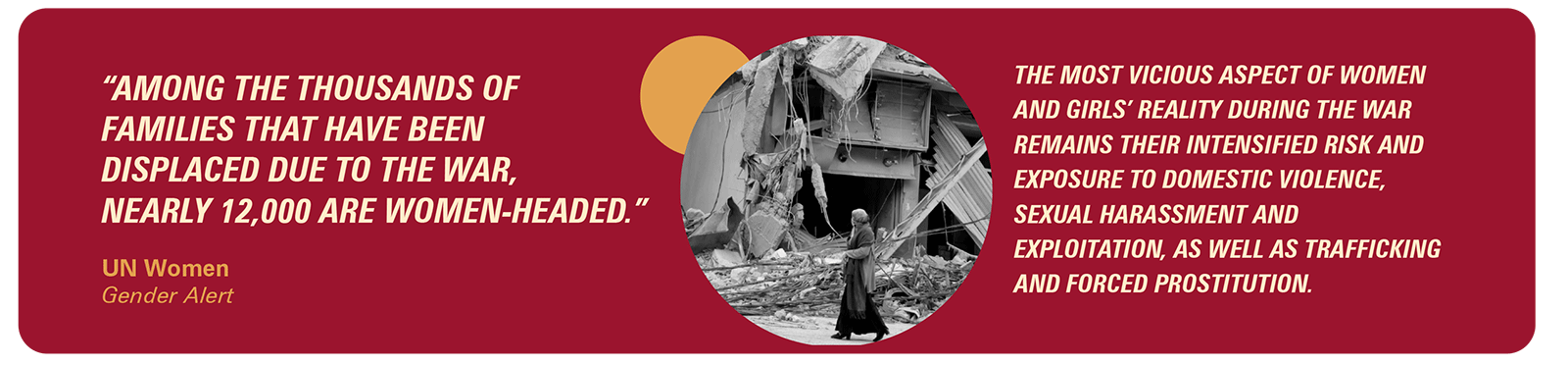
The “Gender Alert” issued by UN Women in September 2024 highlighted the disproportionate impact of the war on women and girls. According to the report, among the thousands of displaced families, nearly 12,000 are headed by women.
The most vicious aspect of women and girls’ reality during the war remains their intensified risk and exposure to domestic violence, sexual harassment and exploitation, as well as trafficking and forced prostitution.
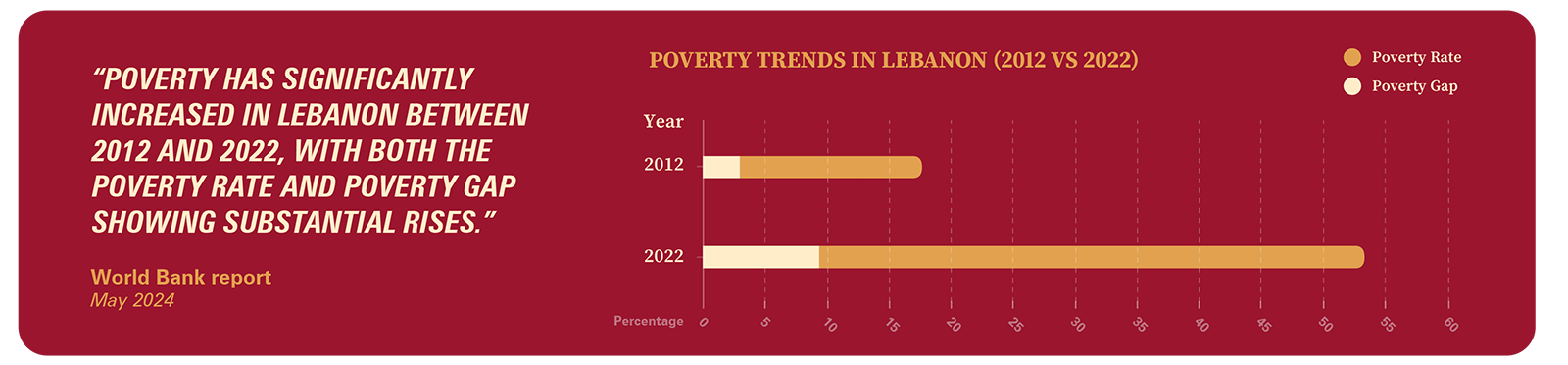
This war unfolded against the backdrop of longstanding structural challenges, including an oligarchic governance, a financial and economic collapse and the devaluation of the local currency since 2019. These conditions have significantly exacerbated vulnerabilities, particularly for women, in particular displaced girls and women head of households.
Read More
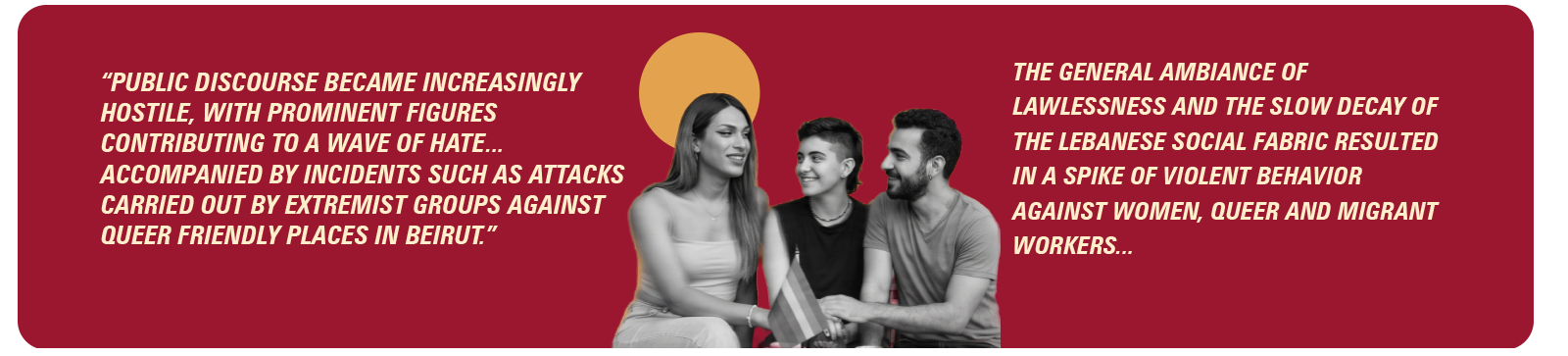
Prior to the war in 2024, there had been a rise in discrimination against individuals and groups in vulnerable situation, including forced deportations of Syrian refugees in Lebanon and increased attacks targeting LGBTIQ communities.
Read More
Public discourse became increasingly hostile, with prominent figures contributing to a wave of hate in response to a draft bill proposed by nine members of parliament to decriminalize homosexuality. This was accompanied by incidents such as attacks carried out by extremist groups against queer friendly places in Beirut.
Concerning the violence against women area, the general ambiance of lawlessness and the slow decay of the Lebanese social fabric resulted in a spike of violent behavior against women, queer and migrant workers, and created an environment of hostility towards them that escalated in 2023 and continued well into 2024.
Two prominent GBV cases in 2024 included the hate campaign launched by the Dar Al-Fatwa, the highest Sunni religious authority, against Shaden Faki, a queer comedian, following a joke she made. Fakih framed this campaign as a backlash against her because of her long-standing political activism, as an outspoken queer woman challenging the hegemony of the male-dominated religious and political oligarchy.
Other GBV cases were also reported during that period. One involved lawyer Suzie Abu Hamdan, who was severely beaten and dragged down the street by her client’s husband as she came out of a hearing for her client at the Jaafari Court. Another case concerned a migrant worker who was assaulted in broad daylight by two men attempted to kidnap her.
While violence against women in Lebanon is not a novel phenomenon, the fact that these incidents are happening more openly, visibly, and in public, marks a distressing trend. Coupled with the disintegration of the social fabric, the total collapse of any sense or modality of justice and the ensuing impunity and shamelessness of offenders, embolden perpetrators of violence and perpetuate this type of behavior.
The Issue
Read More
Trajectory of the family violence bill
2007
In 2007, a committee convened by KAFA included a team of three judges, lawyers from KAFA, and a representative from the Internal Security Forces (ISF) to draft a law against domestic violence.
March 2008
Campaign “towards the protection of women from domestic violence” is launched.
2008
“National Coalition for legislating the protection of women from family violence” is set up, encompassing around 40 different associations.
April 6, 2010
Hariri cabinet amends and ratifies draft law.
April 28, 2011
Formation of a special parliamentary sub-committee to review draft law.
June 2011
While the draft bill was being studied by the parliamentary sub-committee, Dar al-Fatwa issued a press statement condemning it and demonizing the right groups supporting it for “inciting the destruction of the Muslim family.”
August 2011
Joint declaration from both Sunni and Shia religious authorities rejecting the pro-domestic violence law coalition’s and other feminist organizations’ “dubious sources of funding.”
January 2012
The coalition launched a campaign naming and shaming the members of the parliamentary sub-committee making these changes, and called on them to not “mutilate and cripple the law.”
July 2012
Feminist activists from the coalition marched into parliament square raising banners addressing MPs: “Your responsibility is to protect us, our responsibility is to hold you accountable.”
July 31, 2012
Sub-committee presents an amended draft law.
August 2012
The sub-committee called for a press conference to announce the fruits of its labor.
July 22, 2013
Parliamentary joint committees ratify the sub-committee’s amended draft.
March 8, 2014
After six active years of advocacy, popular campaigns, and networking with local communities, one of the biggest public gatherings on women’s rights takes place.
+ Read More
2017
KAFA launched a draft bill to amend Law No. 293, endorsed by the Minister of Justice, Minister of State for Women’s Affairs, and Minister of State for Human Rights.
August 3, 2017
The council of ministers approved the proposed amendments.
2020
A final round of amendments proposed by KAFA was put forward.
2021
Yet another round of amendment on the domestic violence bill, initially passed in 2014.
March 2024
In March 2024, seven opposition MPs proposed a piece of legislation to parliament to “prevent violence against women”, drafted in collaboration with KAFA.
Read More
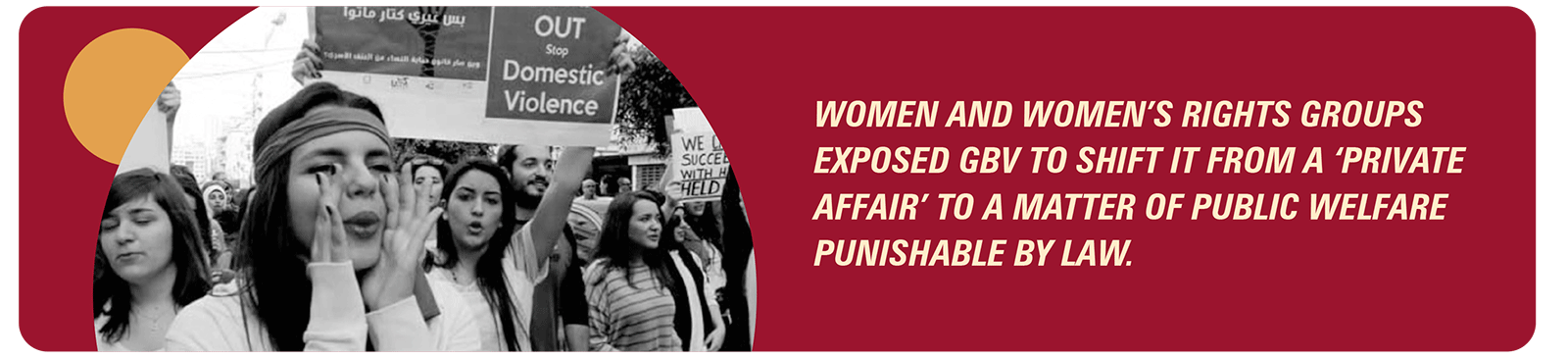
The fight for a domestic violence law started back in 1995 when a group of women survivors stood before a symbolic tribunal in Beirut to expose unspoken tragedies long concealed from the public. The social perception that governed the issue of Violence against women is that it is a “private affair” to a matter of public welfare, one that is punishable by law.
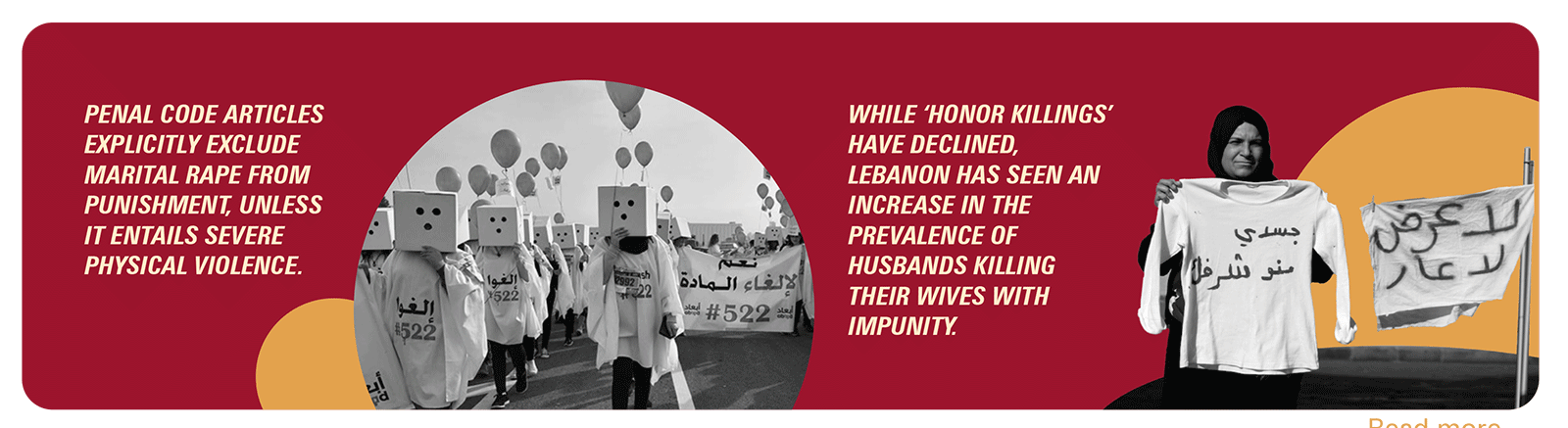
Prior to the domestic violence law (2014), laws governing violence were the same for both men and women with no special provisions for domestic violence, and articles governing rape excluded marital rape from punishment and exonerated rapists who chose to marry their victims.
Among the most prominent groups who engage in awareness raising for a law against GBV is the organization KAFA (Enough Violence & Exploitation). The work began in 2007 with a preparation of a draft bill against domestic violence. KAFA then brought together several organizations under the umbrella of the “National Coalition for Legislating the Protection of Women from Family Violence.” The coalition included a broad array of nongovernmental organizations (NGOs) working on different human rights concerns, such as religious-based associations, confessional associations, associations dealing with physical disabilities, LGBTIQA communities, as well as Lebanese and Palestinian women’s rights groups.
The whole process of drafting the law, its discussion within cabinet and parliamentarian committees was opposed by religious authorities. Clerics from both Sunni and Shia religious establishments joined forces in refusing the draft law. A meeting between both in August 2011 emphasized this rejection and raised rumors about the pro-domestic violence law coalition’s and other feminist organizations’ “dubious sources of funding,” insinuating that these organizations were only fighting for a domestic violence law because Western governments were funding their work and demanding it.
Throughout the years, KAFA and the coalition’s approach relied on engaging a wide range of stakeholders—such as doctors, lawyers, and security forces—right from the beginning. The coalition actively reached out to media representatives and invested substantial amounts of time in training, informing, and working closely with them; and providing expert advice on framing talk shows, reportages, and issues. Further, the coalition brought several non-traditional allies to the women’s movement, such as the women’s committees of different sectarian political parties, in order to win support for the draft bill. This intensive lobbying process culminated in a march that gathered over 5,000 people protesting on International Women’s Day in 2014, one month before the parliamentary session that saw the passing of the law.
In July 2013, the parliamentary joint committees ratified the amended draft they received from the sub-committee. Upon realizing that the draft law had removed several key clauses of the original draft, KAFA lobbied MPs to retain much of the original draft. Although they received 71 signatures of support, not a single MP kept their promise. On April 1, 2014, the Lebanese Parliament passed the Law on the Protection of Women and Family Members from Domestic Violence. The passed law, which was an amended version of the draft law released seven years ago, contained several distortions and gaps. It left out multiple forms of abuse and focused on family violence over GBV more broadly by changing the name of the law from “Draft Law to Protect Women from Family Violence” to the “Law to Protect Women and Other Family members from Family Violence,” thus eroding its focus on women. Further, it limited the protection guaranteed to the children of the victim/survivor and turned marital rape into an issue of “marital rights,” criminalizing only “injuries” resulting from procuring this right. It also gave priority to existing personal status laws in the case of a conflict with the new law. Thus, although its passage represented a success for the women’s movement to influence policy, the victory was a diluted one.
In March 2024, opposition MPs Najat Saliba, Paula Yaacoubian, Halima Kaakour, Cynthia Zarazir, Michel Doueihy, Firas Hamdan, and Marc Daou, proposed a piece of legislation to parliament to “prevent violence against women”, drafted in collaboration with KAFA. The bill, characterized by a comprehensive outlook on violence against women, offered a refined and more wide-ranging definition of domestic violence replacing the one proposed in the 2014 bill, and specified domestic violence as “any act or practice that reflect an abuse of power within the family through physical – or other forms of – violence”. The need for the bill, according to the MPs who presented it to the parliament, is a response to the previous laws’ failure to meet the need for “prevention, prosecution, protection, criminalization, and provision of necessary services and compensation for damages caused to victims”.
Sexual Harassment
1990s
Featured the creation of national and international groups focused on GBV in Lebanon such as the Lebanese Council to Resist Violence against Women (LECORVAW).
2011-2013
“The Adventures of Salwa” (Nasawiya, the feminist collective) was published.
2012
A massive protest under the call to “Fight Rape” organized by Nasawiya and other young feminist groups was organized.
2012
Draft law addressing sexual harassment in the workplace by Nasawiya, in collaboration with progressive scholars and legal think tanks was developed. (It was never presented at the Parliament).
2013
Establishment of the first Title IX office at the American University of Beirut.
2016
Report by the International Men and Gender Equality Survey in Lebanon and UN Women found that two-thirds of women respondents reported experiencing sexual harassment in public spaces.
+ Read More
2017
HarassTracker’s 2017 research demonstrates that sexual harassment is significantly under-reported in Lebanon.
+ Read More
2017
Establishment of a Ministry of State for Women’s Affairs. Approval of a draft law criminalizing sexual harassment.
2018
A study by the Arab Foundation for Equality and Freedom (AFE) found that only 15% of employers surveyed in Lebanon have policies that address sexual violence.
2019
Two gender machineries started working separately on drafting anti-sexual harassment laws: the NCLW and the Women and Children parliamentary committee chaired by MP Inaya Ezzedine.
Oct 29, 2019
After the resignation of the government the NCLW and the World Bank Group’s Mashreq Gender Facility began working on yet another sexual harassment law.
Dec 21, 2020
“Law to Criminalize Sexual Harassment and [for] Rehabilitation of Its Victims” was adopted.
Read More
In comparison to the campaigning and lobbying for the protection of women against family violence that started in the early 1990s, activism around sexual harassment has been present in Lebanon for decades, stretching back to demands of women’s labour organizing in the 1950s.
The 1990s featured the creation of national and international groups focused on GBV in Lebanon such as the Lebanese Council to Resist Violence against Women (LECORVAW). Yet, while sexual harassment was included in the GBV paradigm, it never seemed to be a primary concern; it was rather folded in with other demands of the women’s movement.
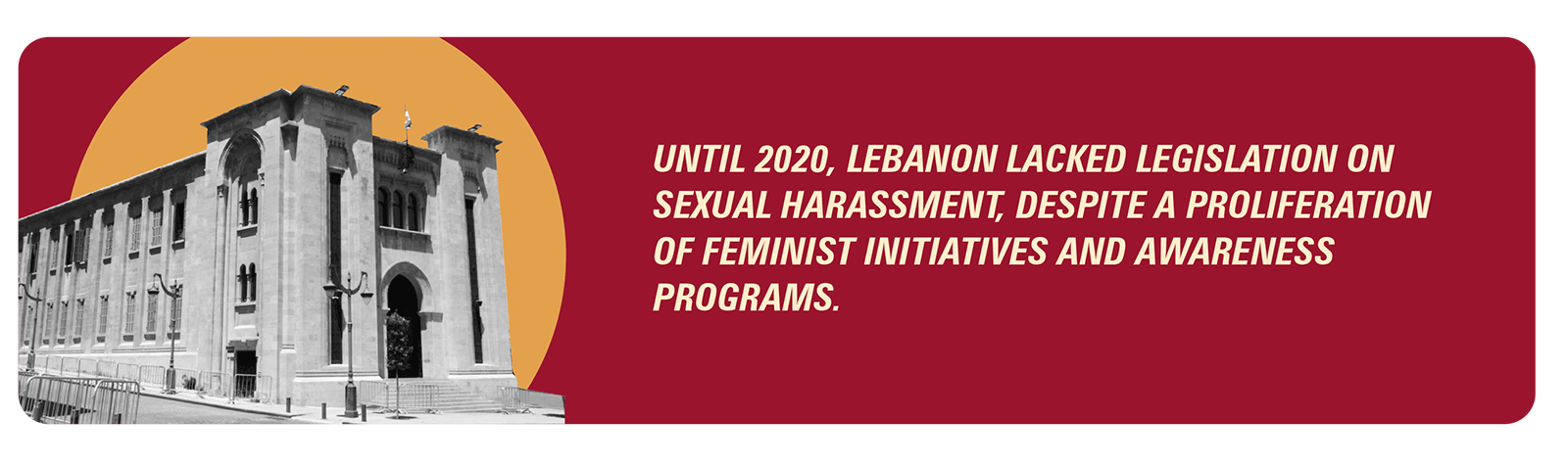
Until 2020, Lebanon lacked legislation on sexual harassment, despite a notable proliferation of feminist initiatives and programming with the objective of raising awareness on the matter. The Lebanese penal code neither defines nor criminalizes sexual harassment. The only reference to it is in Article 503, which criminalizes the act of coercing or threatening someone into committing “immoral acts,” including non-marital rape and abduction.
In 2017, a Ministry of State for Women’s Affairs was established. On March 8, 2017, the Lebanese Cabinet approved a draft law criminalizing sexual harassment as a “gift to women,” in honor of International Women’s Day, according to statements made by Minister of State for Women’s Affairs Jean Ogasapian. This announcement came less than two months after the Lebanese parliament voted down a bill, originally proposed in 2014 by MP Ghassan Moukheiber, to criminalize sexual and racial harassment. Numerous MPs ridiculed Moukheiber’s bill when it came up for a vote in January 2017, openly laughing and questioning whether another law was needed to protect men from women.
It was the draft that MP Ezzedine was working on that eventually saw the light on December 21, 2020, under the name “Law to Criminalize Sexual Harassment and [for] Rehabilitation of Its Victims.” The law mostly addressed sexual harassment in the workplace. Predictably, the law “fell short of international standards by addressing sexual harassment solely as a crime and neglecting prevention, labor law reforms, monitoring, and civil remedies,” according to a statement by Human Rights Watch on the eve of International Women’s Day 2021.
The law also falls short of the Violence and Harassment Convention, which demands governments address violence and harassment at work through an “inclusive, integrated and gender-responsive approach,” including through labor laws, occupational safety and health laws, and equality and non-discrimination laws, in addition to criminal law.
The first major issue with the law is that it bypasses structural reforms that the Lebanese state needs in order to prevent of sexual harassment, such as identifying marginalized populations that are particularly vulnerable to abuse. Migrant domestic workers for instance, who are excluded from the labor law and are isolated in the private homes of their employers and bound to them through the sponsorship system, are the most at-risk group and are not covered by the 2020 law. Another group includes Syrian and Palestinian refugees and transgender women. Another structural measure that the law bypasses is the absence of sexual harassment policies in corporations and organization in Lebanon.
In addition, feminist and women’s rights watchdog groups have raised four major concerns that might limit the law’s capacity to protect victims of sexual harassment. Among the most prominent is the law’s definition of sexual harassment. The law defines sexual harassment as “any bad and repetitive behavior that is extraordinary, unwelcome by the victim, and with sexual connotation that constitutes a violation of the body, privacy, or emotions.” It also notes that sexual harassment can occur through speech, actions, and electronic means, and considers single or repeated acts that use, “psychological, moral, financial, or racist pressure to obtain benefits of sexual nature” as sexual harassment. While the broad definition may be used in favor of the victim, it may also be exploited by Lebanese authorities to support perpetrators if certain behaviors are not “bad” or “out of the ordinary” enough.
Another concern highlighted by legal scholar and lawyer Karim Nammour from the human rights’ watchdog and think tank Legal Agenda was the burden of proof, which is on the victim. He notes that the law requires that victims of sexual harassment not only prove that they have been harassed, but also the consequences that they have suffered as a result, as opposed to demanding that the perpetrator prove their innocence. Victims are therefore requested to provide irrefutable evidence that they have suffered from sexual harassment. In contexts like the Lebanese, people exploit their connections with individuals in high-ranking positions to exonerate themselves, and it’s almost invariably the men who manage to sway matters to their favour.
A third concern is the law’s failure to protect the privacy of sexual harassment survivors from public scrutiny, which is very likely to lead to retaliation from the perpetrator, his friends, or his family. Per the law, survivors of sexual harassment can only use criminal courts to file complaints, in contrast to civil courts, which necessarily makes the case and their names public. In other words, the victim’s privacy will not be protected under the new law which makes filing a complaint unrealistic for those who fear retaliation or do not wish to publicize their cases.
A final concern is exposing survivors wishing to file complaints using the law to re-traumatization. Although Article 3 of the law notes that steps should be taken to protect the victim and witnesses during investigation and prosecution, the article remains vague. Gender-responsive training for security agencies, prosecutors, and judges is essential for treating victims sensitively and for providing a safe environment for reporting and pursuing complaints. Without this training for frontline justice personnel, survivors of sexual harassment and violence risk re-traumatization and stigmatization upon seeking remedies through the criminal law system as a result of discriminatory attitudes at police, and from prosecutors and judges.
Despite it being a step forward for many, the law fails to truly protect victims/survivors of sexual harassment, and to provide them with a safe environment to report and attain justice.
Types of contestation
Domestic violence
Deliberate lack of implementation, particularly inaction and actively stalling discussing and passing both bills, the domestic violence and family violence bill, manifestations of backlash include vilification and stigmatization of the advocates and supporters of the law, often demonizing them and accusing them of destroying Muslim family values. Another type of backlash is the co-option and subversion of women’s right to protection against domestic violence.
Sexual harassment
Belittling and demeaning of all attempts at rectifying the gender status hierarchy and power imbalance, ridiculing the importance of adopting a law.
Read More
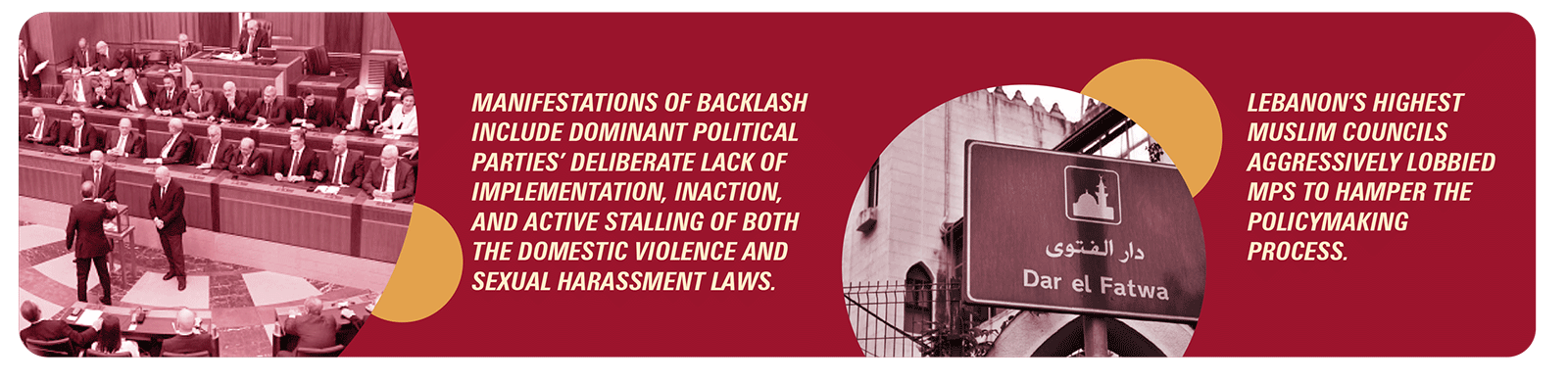
Based on the six types of Backlash outlined in Flood et al. (2018), the manifestations of backlash against legislation protecting women against violence in Lebanon include the dominant political parties’ deliberate lack of implementation, particularly inaction and actively stalling discussing and passing both bills, the domestic violence and sexual harassment.
On the level of the family violence bill, manifestations of Backlash include vilification and stigmatization of the advocates and supporters of the law, often demonizing them and accusing them of destroying Muslim family values. Another type of backlash is the co-option and subversion of women’s right to protection against domestic violence. This was particularly perpetrated by party representatives who falsely promised to lobby for retaining the original version of the bill, including the many MPs who signed the support petition, only to later agree on passing it with the distortions. Their agreement to sign the petition could have been an attempt to appease any possible opposition or unrest within the party, especially that KAFA had rallied the women’s committees of these parties in favor of the law. Further, such two-handed dealings might also have been used to pacify the coalition’s campaigners, who by that time had become known for their public shaming techniques against MPs.
Following Htun and Weldon’s typology (2010), backlash against the domestic violence law is characterized by both doctrinal and status politics. While both doctrinal and status politics fuel backlash in the context of domestic violence, only status politics drives backlash in the context of sexual harassment.
As domestic violence is deemed a personal status matter that falls under the purview of religious courts and rulings, religious authorities harshly criticize any attempt at shifting control away from them and into the realm of civil law. Lebanon’s highest Sunni and Shiite councils aggressively lobbied MPs to hamper the policymaking process and obstruct the bill’s successful passage through parliament. Though religious authorities’ hostility towards the law did not stop it from passing, it still had several important effects, mainly that the parliament passed a distorted version of the originally proposed bill, effectively eroding the essence of the law.
It is worth noting three specific modifications of the law, first, the reframing of marital rape as a punishable crime in the original bill to a “marital right” criminalizing only “injuries” resulting from procuring this right. This dangerous language that frames sexual relations between a married couple is a right is exclusively found in religious personal status laws. Though the laws frame it as a right for both the man and woman in a couple, patriarchal norms and values transforms it into a prerogative of the man, and facilitates control over women’s bodily and sexual autonomy.
Second, the amendment limiting the protection granted to the children of the victim/survivor to only those under the mother’s custody, or those within the age of custody protections according to the personal status laws, as opposed to including the victim’s children who have been exposed to violence regardless of their custody age.
Third, the inclusion of the shameless amendment giving priority to existing personal status laws in the case of a conflict with the new law. While the children’s custody amendment was ultimately repealed during the first round of amendments proposed by KAFA in 2017, the other two remain. This underscores the power exerted by religious authorities on the MPs who have worked on the law and reveals the tug of war between seculars, feminists, and other advocates of the law on the one hand, and all of the country’s religious authorities on the other.
The backlash against the sexual harassment law is also driven by status politics. Backlash perpetrators belittled and demeaned all attempts at rectifying the gender status hierarchy and power imbalance, including any attempts to pass an anti-sexual harassment law. As observed when MP Moukheiber’s law proposal was due for discussion in parliament, numerous MPs ridiculed it and jokingly questioned whether a law was now needed to protect men from women. This clearly points to policymakers’ determination to keep women crippled by threats of violence and harassment in public, particularly in the workplace, preventing them from reaching status equality.
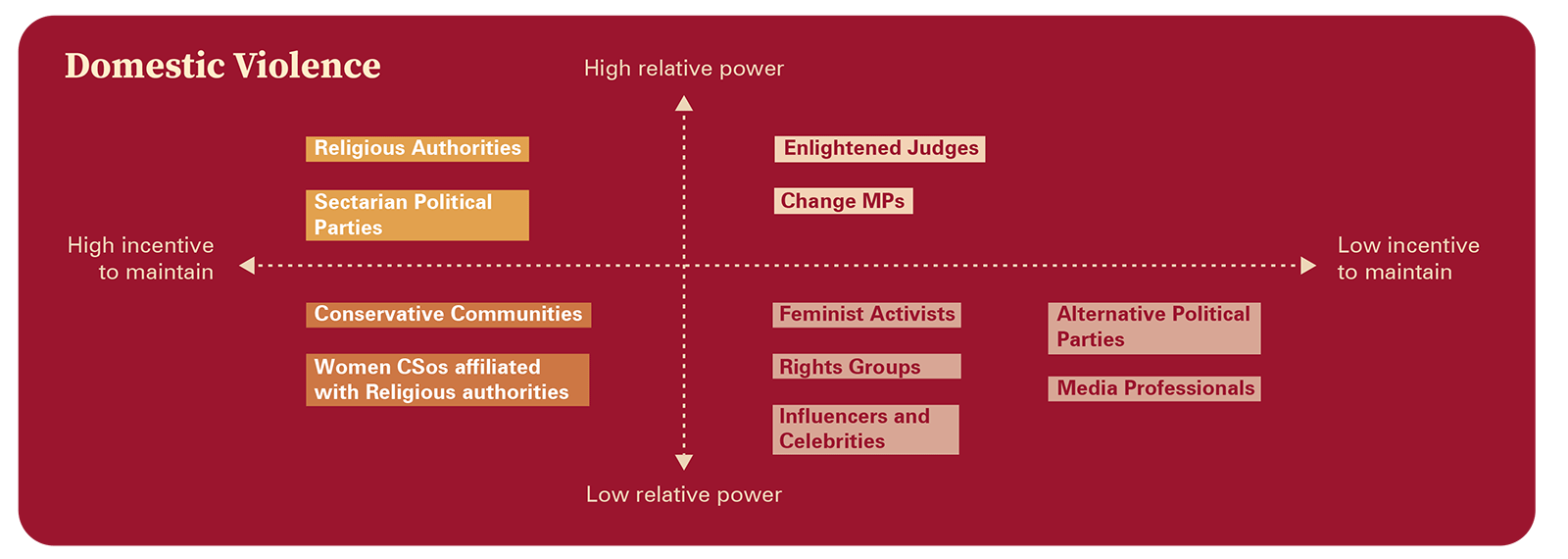
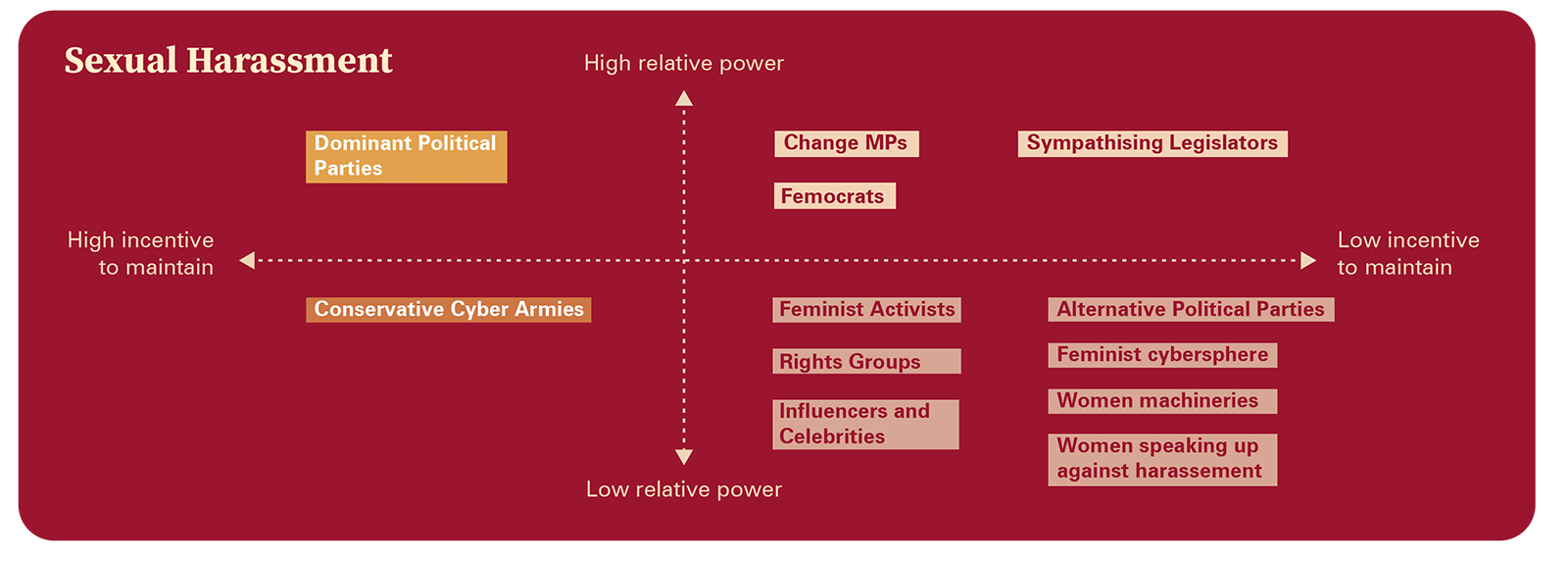
Actors
Drivers
Read More
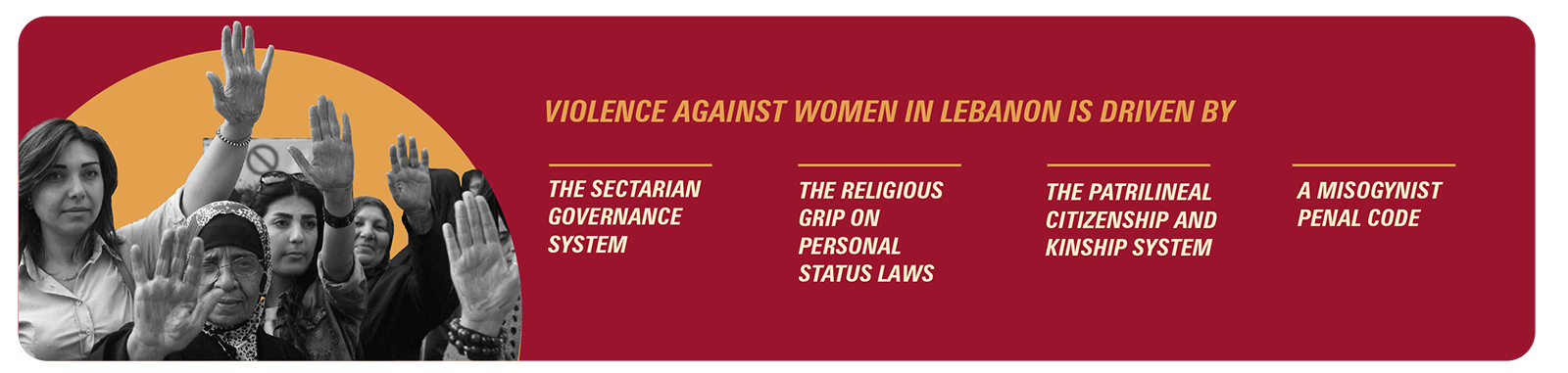
These two cases of sexual harassment and domestic violence are enmeshed within the larger system of discrimination and violence against women in Lebanon, defined by four primary structural issues: a sectarian governance system, the grip of religious institutions on personal status laws, the patrilineal citizenship and kinship system prevalent in all spheres of life (families, the market, and governmental institutions), and the largely misogynist penal code.
Personal status law elevates family law to public law and legalizes preferential treatment of men in sectarian codes. While the legal codes of the Muslim and Christian sects vary, these laws more generally enshrine patriarchy, with all religious laws discriminating between women and men in a myriad of issues, including marriage and assignment of roles within the family, and by positioning women and girls as inferior compared to men and boys in the face of the law. The personal status laws might be the primary mechanism of legal recognition devised by the state for separate sectarian groups, but sect is not citizens’ only register of recognition in Lebanon.
Citizenship in Lebanon is recognized via sex and sect. Sex-based differentiation saturates most branches of Lebanese law and along with gender, determines which facets of citizenship are available and which are foreclosed to women and girls. This underscores how deeply embedded sexual difference and gender-based discrimination are in the Lebanese political system. Mikdashi (2022) uses the term “sextarianism” to approach and unpack this system in Lebanon, and argues that “sect and sex are mutually constitutive modes of political difference in Lebanon.” Mikdashi (2022) observes that “state effect,” or the material and ideological presence and status of the state apparatus, and therefore Lebanese sovereignty itself, emerges from the management of these modes of political difference. Consequently, laws that aim to shift the structural inequality of women and girls, sexual minorities, and other marginalized groups, in this case the anti-sexual harassment and domestic violence bills, face stringent backlash from political and religious authorities who benefit from the continuation of this “sextarian” system.
Spaces
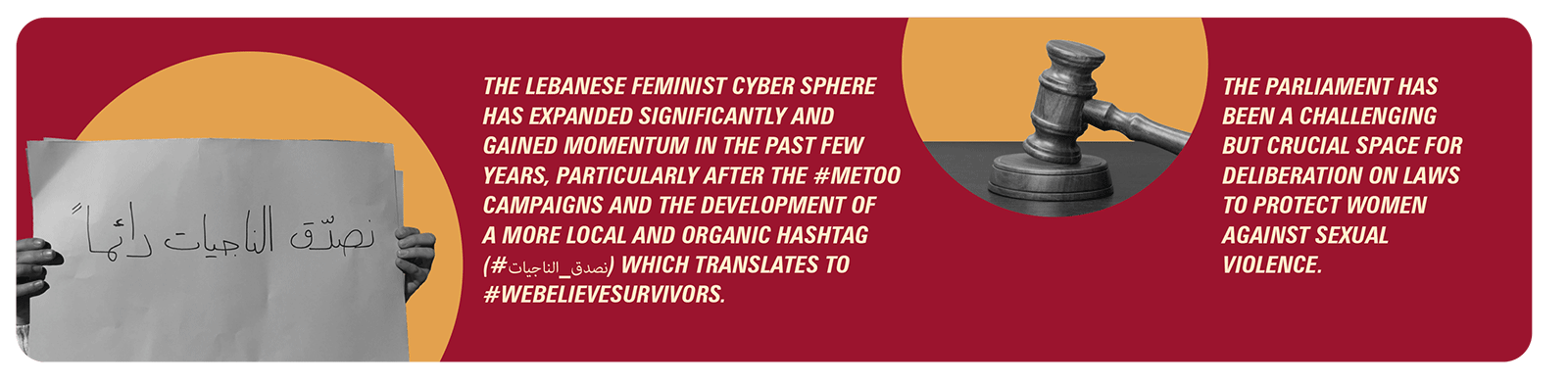
Read More
Secular citizens and advocates believe that civil marriage could strengthen communal ties, unite people from different faiths, and diminish the confessional and sectarian makeup of Lebanon. On the other hand, the intersecting interests of conservative religious authorities and most sectarian parties enable them to leverage their power to oppose it and obstruct its implementation. Formal and informal processes and networks were used to steer the draft law through the approval process and counter-opposition and questions.
Events
Read More
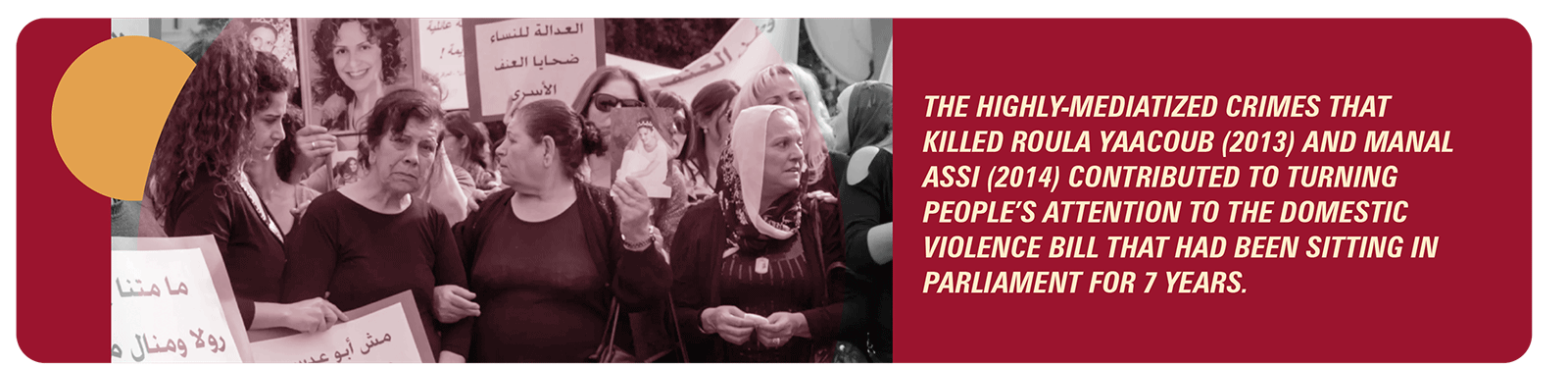
These two crimes were the drop that spilled the glass. The years-long intensive advocacy and online and offline campaigning around the domestic violence issue culminated in a massive protest organized by KAFA on International Women’s Day on the 8th of March, 2014. Over 5,000 people responded to KAFA’s call, and, led by the mothers of Roula Yaacoub and Manal Assi, the crowd marched in Beirut in what was described as the largest women’s rights protest in recent history.
This protest not only demonstrated that domestic violence was no longer solely a women’s issue but a matter of broader public concern, it also served as the impetus for parliament to place the law on the agenda of the upcoming session on April 1, 2014.
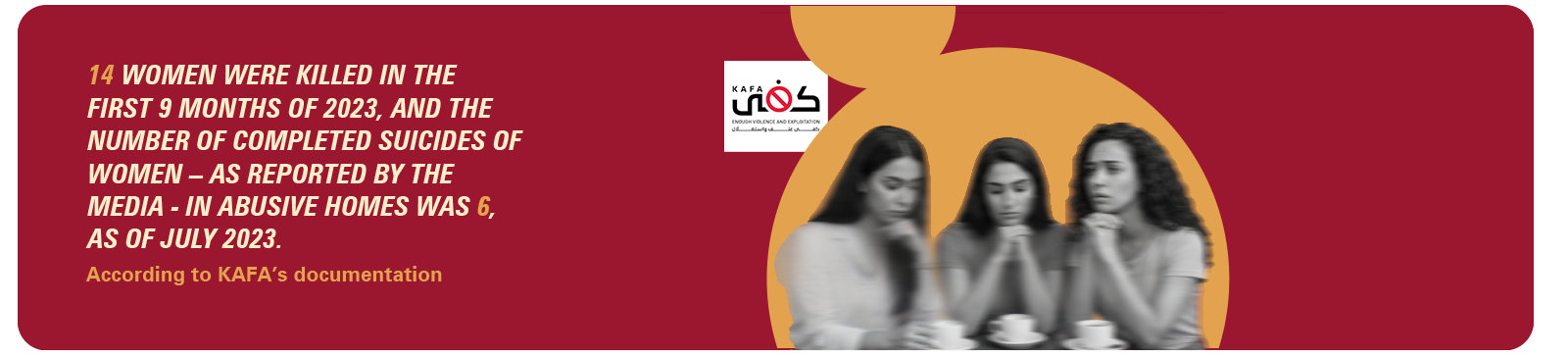
In 2023, women victims of domestic violence were in heightened danger, partly as a result of the judges’ strike that started in mid-August 2023 in which judges protested against the decline in salaries and the deterioration of their work conditions.
Indeed, 2023 witnessed several cases of crimes against women and femicides all over Lebanon. In February 2023, a retired Internal Security officer shot his ex-wife, Mona El-Homsi, in the Northern city of Tripoli with a hunting rifle.
In March, Dr. Zahraa Al Tashem was violently beaten by her brothers over an inheritance argument. In an interview, Dr. Zahraa revealed that she asked for help from the Hermel police station mid-assault. However, the officer remained indifferent despite hearing her scream through the phone.
During the same month of 2023, Zeinab Zeaiter was shot ten times by her husband in front of her children. Not only did she endure violence and misogyny throughout her life, she was also defamed after her passing. Her brother posted a video on social media praising her husband and murderer.
In May, news came out of a man shooting his pregnant daughter three times before fleeing the crime scene. The incident was said to have occurred after a family fight regarding the father’s disapproval of her marriage. Also in May, another woman, Rajia Al-Akoum was killed by her ex-husband, who ironically happens to be the former chief of an Internal Security Forces (ISF) station, in front of her three children.
In August, a disabled girl was admitted to a hospital for “a high fever” and later died. Upon examination of her body, doctors revealed that her death was caused by the bruising of her lung membrane. During interrogations, her father admitted to beating her because she cried and said she had special needs and suffered from paralysis and malnutrition.
In 2024, a scandal involving the sexual abuse of children through TikTok rocked Lebanon. Throughout several months between April and June 2024, Lebanese authorities investigated a group of around 30 individuals implicated in this scandal, who allegedly used TikTok to lure and groom children for sexual assault. Gang members reportedly filmed the assaults, intending to sell them on the dark web, according to local media outlets. Lebanese police reports revealed that gang members – some of them minors – lured children via TikTok messages and then sold images and footage of them on the dark web, hence blackmailing them into coming back and enduring assault repeatedly.
While this is not about violence against women per se, it is still important to mention it among prominent events within the violence against women and girls policy areas, because this violence against young boys is gendered, and remains an expression of patriarchal violence, and hegemonic power structures that subjugate the younger and more vulnerable to the predatory behaviour of the more privileged.
Sexual Harassment
On the level of the sexual harassment law, two events stand out.
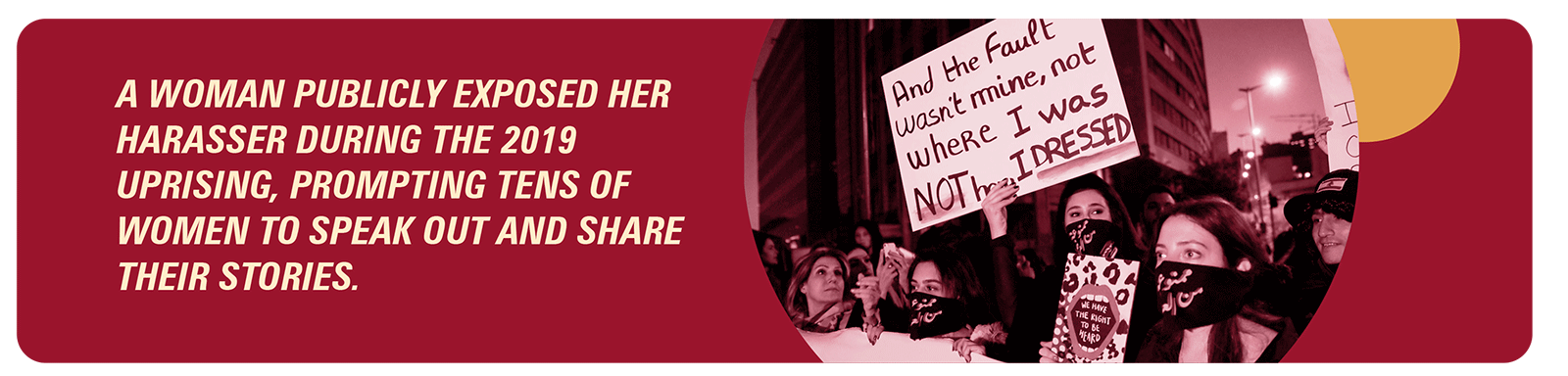
At the height of the uprising, in a protest in November 2019, a woman spots a man who had previously sexually harassed her and decides to expose and shame him to alert other women to his presence and warn them. Upon taking his picture and posting it online, countless other women identified him as the man who sexually harassed, assaulted, stalked, and/or raped them and/or their friends. In the months that followed, tens of women spoke out. Countless resorted to social media to share their stories.
Marwan Habib’s case became a nation-wide scandal, but unfortunately, not only had he shown no remorse over his crimes, the internal security forces have also been too lenient and forgiving with him despite multiple victims’ complaints.
Not only was justice not served for Marwan Habib’s survivors, Habib was also hosted on a talk show to be “questioned” about his actions hence providing him with a platform to justify his actions. Habib was not held accountable for his crimes, and was still free to roam his online and offline crime scenes. Habib was recently arrested in the US for assaulting a woman in her hotel room in Miami.
Habib’s survivors were denied justice in Lebanon, but the scandal around him sparked a long-awaited debate on sexual harassment and turned the public’s attention to the necessity of criminalizing it. It is also worth pointing out to the context of this conversation.
Tactics
Visible power of backlash actors:
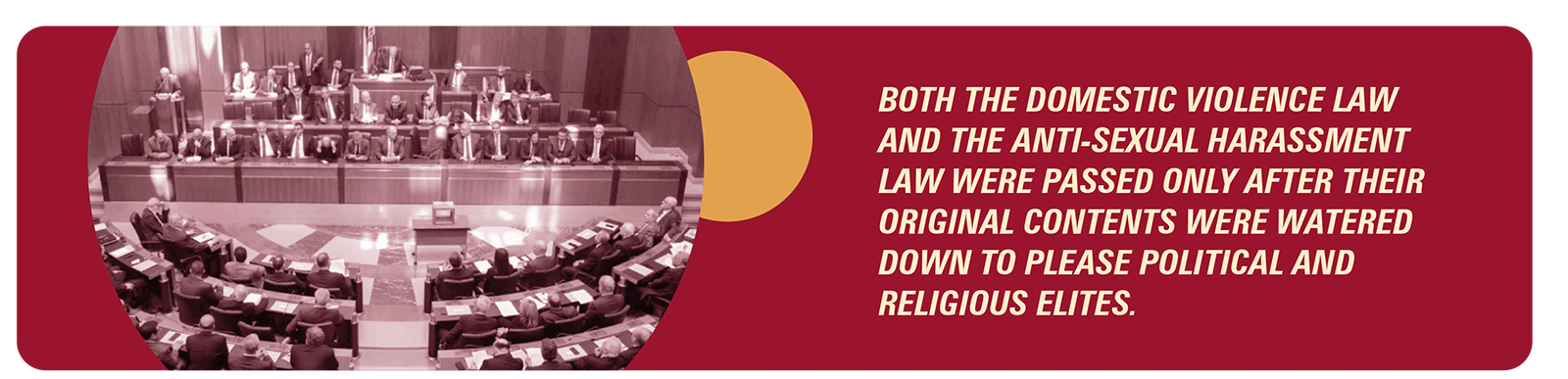
Political and religious elites vehemently opposing the original versions of the laws: both the domestic violence law and the anti-sexual harassment law were only passed into legislation once the contents of each bill had been watered down.
Invisible power of backlash actors:
- The multiple bureaucratic and political delays involved in passing both bills: it took parliament seven years to pass the domestic violence bill
- The continued appointment of conservative political actors to the very sub-committees tasked with reviewing and validating GBV legislation.
- The influence of conservative religious and political elites on public discourse surrounding women’s rights and feminist organizations and their goals.
These actors were able to quickly mobilize a discourse that shed doubts on the funding sources and motives of these organizations as “Western” and therefore, “anti-Muslim” or “anti-family,” was a decisive factor in the time it took to move these pieces of legislation through the various levels of parliament.
Read More
To understand hidden and visible power in the context of women’s protection against domestic violence and sexual harassment, the stalling and delays in passing of both laws on the one hand, and the aggressive attack against the domestic violence bill on the other reveal a number of tactics used by backlash perpetrators/opposition actors to prevent legal changes acknowledging and adequately prosecuting GBV.
One evidence of the visible power of the Backlash actors appears in their ability to pass laws void of any serious content aiming at protecting women and girls from GBV.
The invisible powers can be observed through the delays and the several years it takes them to promulgate legislation for the protection of women and girls from GBV, the appointment of conservative MPs in parliamentarian sub-committees responsible for reviewing and discussing the bills before their discussion in plenary session, and the influence of religious authorities on the public discourse around GBV legislation. This discourse aims at shedding doubts on the funding sources and motives of feminist or women’s rights advocates organisations as Western” and therefore, “anti-Muslim” or “anti-family”.
The “invisible power” in the context of both laws and particularly domestic violence is vested in the reinforcement of religious authorities’ grip over personal status issues, and resultantly over women’s bodies and agency. It also lies in the reproduction of the same patriarchal traditional norms and values in the Lebanese community that frame sexual relations and women’s bodies as prerogatives for men, particularly their husbands. This form of power reinforces patriarchal social constructs, and patriarchal connectivity, and thus keeping women subjugated in the domestic sphere as a tool to keep her from playing a role, and fully contributing to public and political life.
Countertactics
Read More
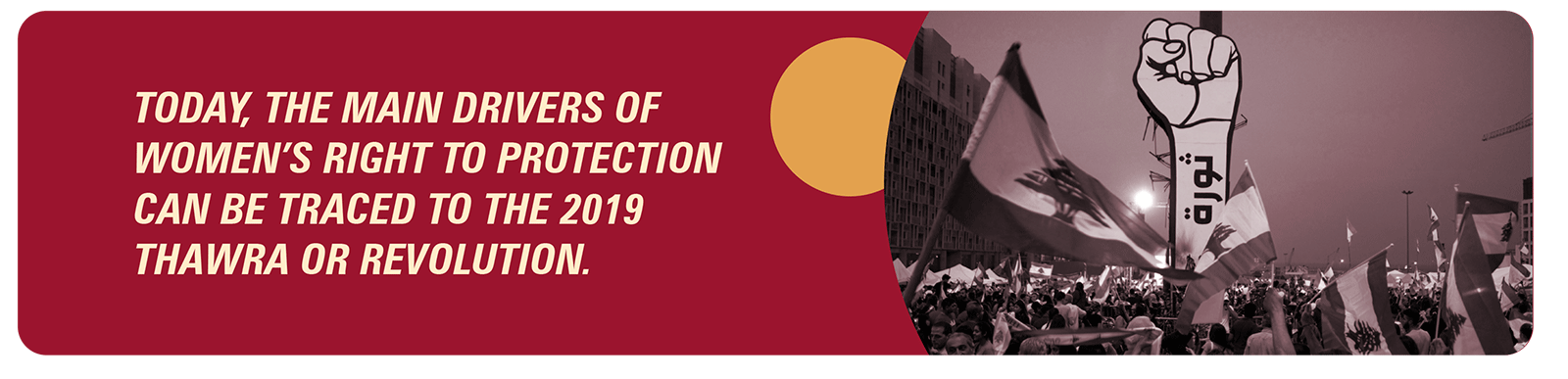
Today, the main drivers of women’s right to protection – on both domestic violence and sexual harassment – can be traced to the 2019 revolution, and the hopes that the revolution sparked for changes to the systemic discrimination facing various marginalized groups, in particular women.
The calls for women’s protection against sexual and gender-violence draws from a historical legacy of feminist campaigning for this right. Women’s rights NGOs, as well as feminist collectives operating online and offline have long received financial support from various foreign governments and international development organizations.
Multiple NGOs have been mobilizing and engaging in campaigning and advocating against GBV.
Further, with the election of the Change MPs, the coalitions they can build inside parliament, in addition to the relationships they have with grassroots movements, will both help in advancing the feminist agenda. With enough popular support, pressure on the government and on other opposing parties in parliament will help in creating new power dynamics and pressure groups which are hard to bypass. This potentially means amendments to better the existing laws on both domestic violence and sexual harassment.
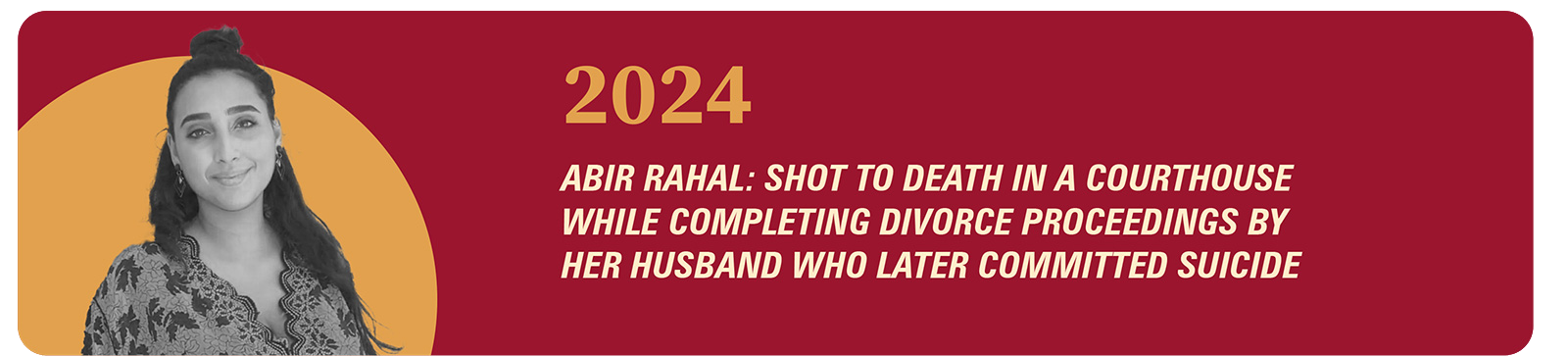
Women murdered by their husbands/ male relatives